
‘Exciting’ results in islet cell trial

A new transplant technique for insulin-producing islet cells has been trialled on a person with type 1 for the first time and has successfully maintained glucose levels at a healthy level.
Wendy Peacock, who lives in Texas in the United States, has suffered from severe hypoglycaemic attacks for much of her adult life. Her condition can be so debilitating that she and her five-year-old son cannot live alone because her blood sugar levels can drop so quickly, she can easily lose consciousness.
In August, Wendy became the first person to participate in a novel clinical trial at the Diabetes Research Institute (DRI) at the University of Miami Miller School of Medicine.
Doctors implanted islet cells within a “biodegradable scaffold” on the omentum, an apron-like lining covering the abdominal organs, to determine if it is a more viable location than the liver where many of the cells do not survive.
‘Sense of comfort’
Camillo Ricordi, M.D., Director of the DRI and an internationally renowned leader in islet cell transplantation, said: “This was the first transplant of islets on the surface of the omentum, using a biologic, fully re-absorbable scaffold technique.
I’ve already seen such a huge change. I’m definitely hopeful and excited
“The omentum is a highly vascularised tissue covering abdominal organs. The site is easily accessed by minimally invasive surgery, and more importantly, has the same blood supply and drainage characteristics of the pancreas — where islets are originally found before they are destroyed in type 1 diabetes.”
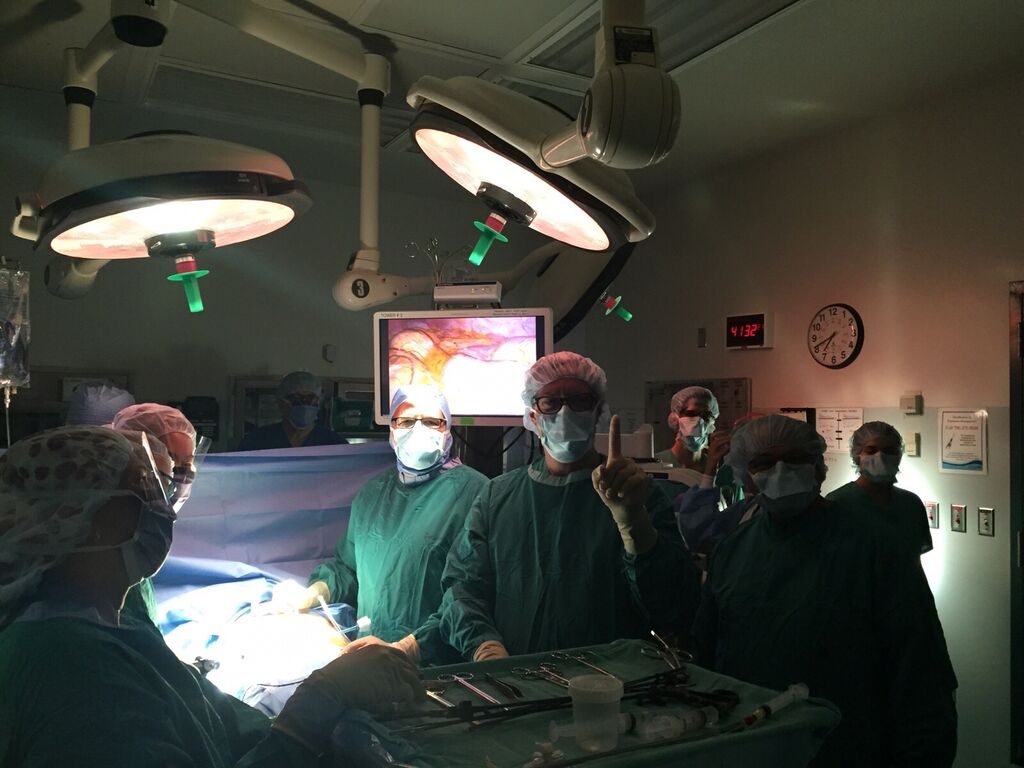
Ricordi’s team transplanted the cells during a laparoscopic procedure at the Jackson Memorial Hospital. The FDA-approved Phase I/II study builds upon decades of progress in clinical islet transplantation and is an important first step toward the development of the DRI BioHub, a bioengineered mini organ that will mimic the native pancreas to restore natural insulin production in people with type 1 diabetes.
Since the transplant, as well as Wendy’s glucose levels remaining at a healthy level, she has also been taken off of insulin completely, according to the University of Miami. Wendy, 43, said: “I’m still processing everything. For me, it’s almost surreal because I’ve been on insulin for 26 years. I’ve already seen such a huge change. I’m definitely hopeful and excited.”
One of the biggest changes, Wendy said, was having a “sense of comfort” in not experiencing severe lows while asleep at night.
Ricordi transplanted the cells in collaboration with Rodolfo Alejandro, M.D., an endocrinologist and Director of the DRI Clinical Cell Transplant Program; Gaetano Ciancio, M.D., M.B.A., FACS, a UHealth surgeon and Director of Urologic Transplant Surgery; and Jose Martinez, M.D., a laparoscopic surgeon at Jackson.
“Wendy is doing remarkably well,” said Alejandro. “Her response is better than we expected, and she is tolerating the anti-rejection drugs with no side effects. Her blood glucose is normal — probably better than for many of us here.”