
Too many children reaching ‘crisis point’ before type 1 diabetes is recognised

Hundreds of babies and young children are becoming seriously ill each year before their type 1 diabetes is diagnosed, a leading charity has warned.
The recorded rate of children being diagnosed with type 1 diabetes while in diabetic ketoacidosis (DKA) – a potentially fatal medical emergency – is rising and reached an eight-year high in 2024-25. Latest data shows that, between April 2024 and March 2025, a total of 902 children aged 15 and under in England and Wales were in DKA at the time of diagnosis1. The figures are particularly concerning in the youngest age group, where a third of children under five (33%) were diagnosed in DKA in 2024-25.
In response, for this year’s World Diabetes Day (Saturday, November 14), Diabetes UK is launching a major awareness drive around the main symptoms of type 1 diabetes – known as the 4Ts – and urging everyone to ‘share the signs – and save a life’.
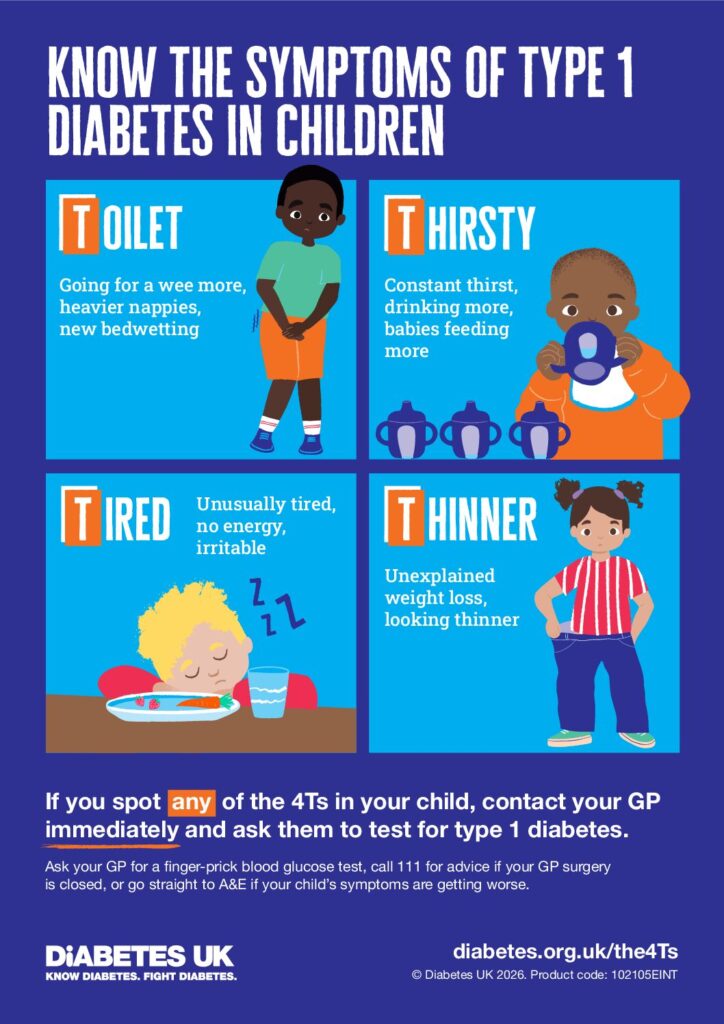
The 4T symptoms of type 1 diabetes are:
- Toilet: going for a wee more often, especially at night. Heavier nappies in babies, new bedwetting in children
- Thirsty: constant thirst, or feeding more in babies
- Tired: feeling unusually tired, napping more or for longer, and changes in behaviour such as irritability or difficulty concentrating at school
- Thinner: unexplained weight loss or looking thinner
In younger children, these symptoms can be harder to detect as they may appear alongside common childhood illnesses such as flu, gastroenteritis and urinary tract infections, meaning there is a risk of type 1 diabetes going undetected. Yet a simple finger prick blood glucose test can quickly identify the condition, could prevent DKA and save a life.
Diabetes UK has issued fresh guidance advising healthcare professionals to ‘think type 1 diabetes’ and urgently test for the condition if a baby or child presents with any one of the symptoms. The charity says parents should contact their GP immediately and ask them to test for type 1 diabetes if they spot any of the symptoms.
What does the data show?
National Paediatric Diabetes Audit data shows the number of children diagnosed with type 1 in DKA has gone from 20% in 2017/18 to 28% in 2024/25. Children under five consistently have the highest rates.
Data published in July by NHS England2 also highlights significant variations depending on where you live. Rates of DKA at diagnosis among children and young people range from 27% to 51% across Integrated Care Boards (ICBs) in England. This variation suggests there are opportunities to reduce DKA at diagnosis by learning from areas with the lowest rates and ensuring best practice is implemented consistently across the NHS, Diabetes UK says.
Similar concerns are seen elsewhere in the UK. Scottish Government estimates³ around 30% of children are diagnosed with type 1 diabetes in DKA, rising to almost 40% in children under five. There are no statistics recorded for Northern Ireland.
Two-year-old Lyla Story from Hull died in her sleep from DKA in May 2025, just hours after receiving a diagnosis of acute tonsillitis. Lyla had also been displaying the 4Ts symptoms including extreme tiredness, increased thirst and more wet nappies, but her type 1 diabetes was not diagnosed.
Lyla’s dad, John Story, said: “Lyla was our bright and beautiful girl, with a personality that filled every room she entered. But less than 24 hours after being diagnosed with a common childhood illness, she was gone.
“Losing Lyla shattered our world. No family should have to experience the devastating loss we have, which is why awareness of the 4Ts is so important. Behind every data point is a child, like Lyla, a family like ours, and a story that should have ended differently. When a person is presenting with any one of the 4Ts, it’s a ticking timebomb and every minute matters. Type 1 diabetes is life-changing, but it should never be life-ending.”
Colette Marshall, Chief Executive at Diabetes UK, said: “A type 1 diabetes diagnosis should never start with a medical emergency. Yet every year, hundreds of UK families face the heartbreaking reality of seeing their children reach crisis point before anyone recognises the condition. For almost a decade, we have seen no improvement in these figures – and that has to change, starting now.
“This World Diabetes Day, we’re urging everyone to learn the 4Ts and share the signs with others. If a child shows any one of these symptoms, particularly if it seems unusual for them, the message is simple: think type 1 diabetes. A simple test could make all the difference – and it could even save a life.”
What is type 1 diabetes?
Type 1 diabetes is an autoimmune condition affecting more than 350,000 people in the UK. It can affect anyone, at any age. It occurs when the body’s immune system attacks and destroys insulin-producing beta cells in the pancreas. It cannot be prevented and there is currently no cure. Treatment is lifelong and involves insulin delivered by injection or pump.
Symptoms can develop rapidly over weeks or even days, with some people, including adults, becoming critically ill and needing emergency treatment before their type 1 diabetes is diagnosed. The 4Ts can also be symptoms of type 2 diabetes, but a lot of people don’t notice them or get any symptoms.
What is DKA?
DKA is a life-threatening medical emergency that can affect both children and adults. It is caused by a severe lack of insulin and can develop within hours. Without enough insulin, the body cannot use glucose (sugar) for energy. Instead, it breaks down fat, causing harmful chemicals called ketones to build up and make the blood dangerously acidic.
Symptoms of DKA can include increased thirst, needing to wee more often and feeling sleepy. It can also include feeling or being sick, confusion, blurred vision or having sweet or fruity-smelling breath, like nail polish remover or pear drop sweets.
To raise awareness of the 4Ts and support earlier diagnosis, Diabetes UK has created new downloadable posters, alongside an updated referral pathway for frontline healthcare professionals on its website. A new 4Ts awareness animation has been created and the hope is that it will be shared far and wide on World Diabetes Day and beyond.
The charity has also been working alongside bereaved families – including those of Lyla Story and Peter Baldwin, who both tragically died as a result of undiagnosed type 1 diabetes. Together, they are campaigning to reduce the number of children diagnosed in DKA and prevent more families from experiencing similar heartbreak.