
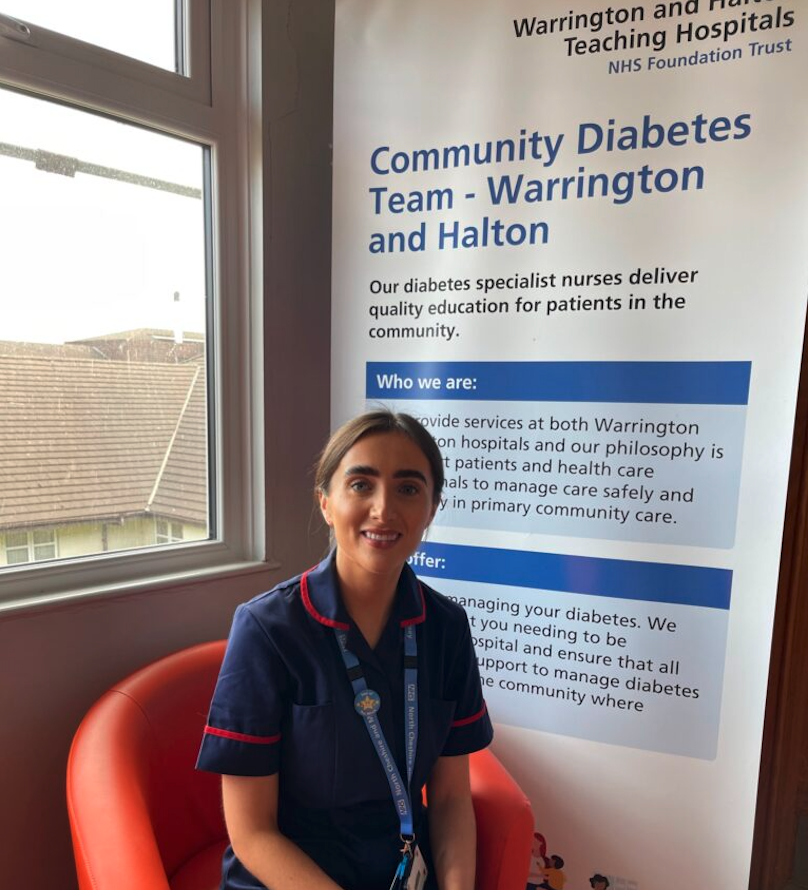
AI-enabled CGMs are transforming diabetes care, DSN says

Continuous glucose monitors (CGMs) enabled by artificial intelligence (AI) are transforming diabetes care from reactive to proactive, a Warrington-based diabetes specialist nurse has said.
Megan Sprigings-Pearson, a diabetes specialist nurse (DSN) at Warrington and Halton Teaching Hospital NHS Foundation Trust, has said that using CGMs to predict blood glucose changes before they occur could revolutionise diabetes care.
According to Megan, regular blood glucose monitoring with Roche Diagnostics’ new Accu-Chek® SmartGuide continuous glucose monitoring system can help people living with diabetes make better decisions around the management of their condition.
She said: “Roche’s latest CGM includes a feature that can forecast overnight hypoglycaemia, helping people manage their diabetes more effectively.
“This predictive capability enables both people living with diabetes and clinicians to make timely adjustments, reducing episodes of high and low blood sugar, minimising complications and supporting personalised, real-time care.”
Starting her nursing career working on a diabetes ward at Aintree University Hospital NHS Foundation Trust, Megan developed strong clinical and leadership skills in diabetes care.
With experience working in A&E at Warrington and Halton Teaching NHS Foundation Trust, Megan has managed acutely unwell patients, including those with diabetes-related emergencies.
“These experiences inspired me to specialise in diabetes, as I saw the significant impact that effective management and patient education can have on improving outcomes and quality of life,” said Megan.
In the North West, key challenges for the diabetes community include high prevalence of the condition and health inequalities, access barriers and low engagement with education.
Megan said: “Targeted community support and improved access to education and care are needed to address these gaps.”
Looking ahead, Megan added: “I am most excited about technologies that make diabetes management more personalised and proactive.
“AI-enabled tools and continuous glucose monitoring can predict highs and lows, helping people prevent complications rather than reacting to them.”
She concluded: “I am also encouraged by innovations in digital education, remote support and structured programmes that make self-management easier and more accessible.
“Combined with a stronger focus on emotional wellbeing and community-based care, these developments could transform how people live with diabetes day to day.”
More than 5.8 million people are living with diabetes in the UK, and an estimated 284,000 people with type 1 and 151,800 with type 2 are eligible for the Accu-Chek® SmartGuide device in England.
Roche Diagnostics has announced that its Accu-Chek® SmartGuide continuous glucose monitoring (CGM) system is now reimbursable on the NHS, giving adults with diabetes easier access to the technology.
This decision makes it the first artificial intelligence (AI)-driven CGM in the UK capable of predicting nighttime hypoglycaemia.
Using AI, the system analyses glucose patterns to forecast levels over the next 30 minutes, two hours and throughout the night, and prompts users to take action if their glucose is expected to drop below a safe range.
A water-resistant sensor worn on the back of the upper arm sends readings to a smartphone app every five minutes, helping people stay informed and take action before low blood sugar becomes a problem.