
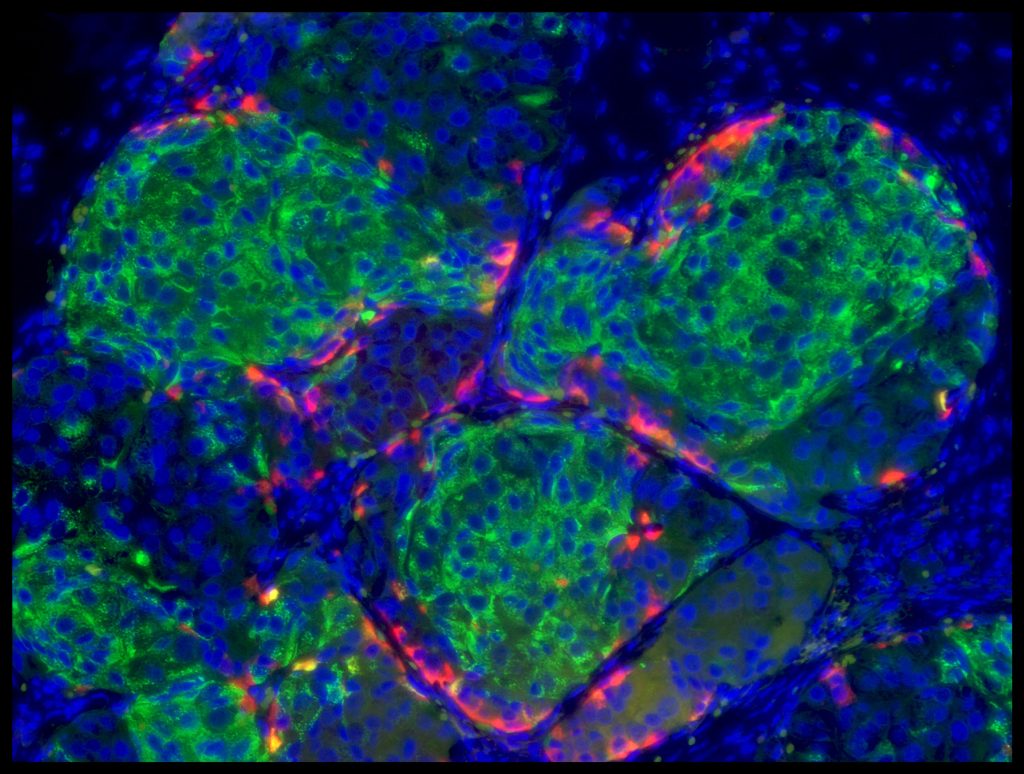
Harvard stem cell breakthrough – dawn of a new era or false hope?

Last Friday diabetes made the news bulletins in dramatic style, with Radio 4’s agenda-setting Today Programme going ‘big’ on the story and The Times’ front-page proclaiming “Diabetes: a cure at last”.
It was in response to the breakthrough announcement that a JDRF-funded team at Harvard University had created human insulin-producing beta cells in the kind of massive quantities needed for cell transplantation and pharmaceutical purposes, paving the way for revolutionary treatments for Type 1 diabetes.
A week on from the “giant leap forward”, we have asked leading experts and organisations from the diabetes community to go behind the sensational headlines and, now the dust has settled, explore what it really means.
 Rachel Connor, Head of Research Communication, JDRF
“My colleagues at JDRF in the UK will tell you I’m usually pretty quick to pour cold water on any research announcement. So when they heard me saying ‘this is huge’ while reading Dr Melton’s paper, they swiveled in their chairs. I surprised everyone by saying ‘yes, we can describe this as a breakthrough’.
“Why would that be surprising? Well, I’ve pretty much outlawed the word ‘breakthrough’ because it is so often used inappropriately. I like to reserve it for when it’s really meaningful. When a major scientific obstacle, slowing our progress to the cure, has been overcome.
“Inevitably, sections of the press will always sensationalise. One giant leap for man is no longer enough – it must be the leap to end all leaps for some newspaper editors to pay attention. So as thrilled as I was to receive these study results, I was exasperated when I saw the headlines about a cure at last for diabetes.
So whatever the headlines, let’s allow ourselves a shared moment of sheer joy
“Instead of focusing just on the brilliant achievements of this study, expert commenters, including our own Sarah Johnson, had to spend time explaining that no, we can’t actually take away the burden of Type 1 diabetes from the millions of people affected by the condition just yet.
“But it still brings new treatments and, yes, a cure, genuinely closer to reality. Of course we should always be cynical about media coverage. But that doesn’t mean JDRF supporters should be cynical about this research breakthrough itself – which, make no mistake – they made possible. Their donations allowed it to be funded. It is they who have enabled Dr Melton to accelerate our journey to the cure.
“So whatever the headlines, let’s allow ourselves a shared moment of sheer joy. Making a massive stock of near perfect human beta cells means we’ll be able to study much more quickly than ever before what these cells do in all kinds of different conditions in the lab. We’ll be able to see much more quickly how potential drugs affect beta cells, saving us from years of effort chasing our tails with the wrong drugs. And yes we’ll have a potential source of cells for transplanting into people with Type 1 diabetes.
 Professor Roger Gadsby MBE, NICE and IDF guidelines author and former GP
“My view would be that it is an interesting and potentially very important paper for the Type 1 diabetes research community, but that it will be some years before we know how much of a break through it will be in treating humans who have Type 1 diabetes.
The experiments have been in mice. They have yet to prove it will work in other animals and then in humans. Many things that work in mice, don’t work in humans. I guess this research programme would take a minimum of 10 years.
I guess this research programme would take a minimum of 10 years
“The other very significant problem is that current treatments for Type 1 diabetes work, although the injections and management regimes can cause significant impact on Quality of Life. Some people live full lives and die of non Type 1 diabetes related problems at a normal age and never get significant complications. Others do get significant complications which cause morbidity and premature mortality. We can’t easily tell these two groups apart at present.
“Say this therapy works in humans. It could be argued you would need a 50-year study to test it against current standard therapy to see if it reduces complications and premature mortality given that the new treatment might increase some risks of say infection or cancer.”
 Dr Partha Kar, Clinical Director of Diabetes, Portsmouth Hospitals NHS Trust
“It would be fantastic if this leads to a cure for Type 1 diabetes but I think we need to be cautiously optimistic. We don’t want to raise the expectations of people with diabetes only to dash their hopes. However, this is important and we are all interested to learn more.”
 Laura Cleverly (Ninjabetic), diabetes blogger
“Over the years I have become quite cynical when I hear and read about a cure for diabetes. As a patient reading the title ‘Diabetes: A cure at last’ in The Times last week, I did allow myself a glimmer of hope but that hope was soon snatched away as I read on and realised that it was just a title to catch people’s attention.
I thought the research sounded promising but the newspaper’s hook was cruel
“If I’m honest, I thought the research sounded promising but the newspaper’s hook was cruel. The Harvard research is a big step in the right direction, showing that diabetes hasn’t been forgotten about and is high on the agenda, but I remain cautious when it comes to being hopeful. Who knows how long clinical trials will last, how many anti-rejection medications will be needed and who this treatment will be available to if it proves to be a success. I would recommend for patients to be cautiously optimistic when reading about the ‘cure’.”
 Jenny Hirst, Co-chair, InDependent Diabetes Trust
“It is excellent news that scientists have been able to make huge quantities of insulin-producing cells able to sustain production of insulin for several months.
“However, for the press to describe this as an ‘imminent cure’ gives false hope that a cure is just around the corner. Yes, it is a breakthrough but it will only lead to disappointment if we expect it to be imminent.”
Dr Richard Elliott, Research Communications Manager, Diabetes UK
“This is an exciting and significant step forward in the search for a cure for Type 1 diabetes. It could take many years before insulin-producing cells grown from stem cells can be used in routine treatment. But if they can be used to replace the cells in the pancreas that are destroyed when Type 1 diabetes develops, the lives of people living with the condition could be transformed. It could mean they no longer need to use insulin, which would be a historic breakthrough.
This is an exciting and significant step forward in the search for a cure for Type 1 diabetes
“We need to emphasise that this study involved mice and so we do not yet know if this technique will work in humans, but these results open the door to exciting possibilities for the future. We will be watching for further progress with interest.”