
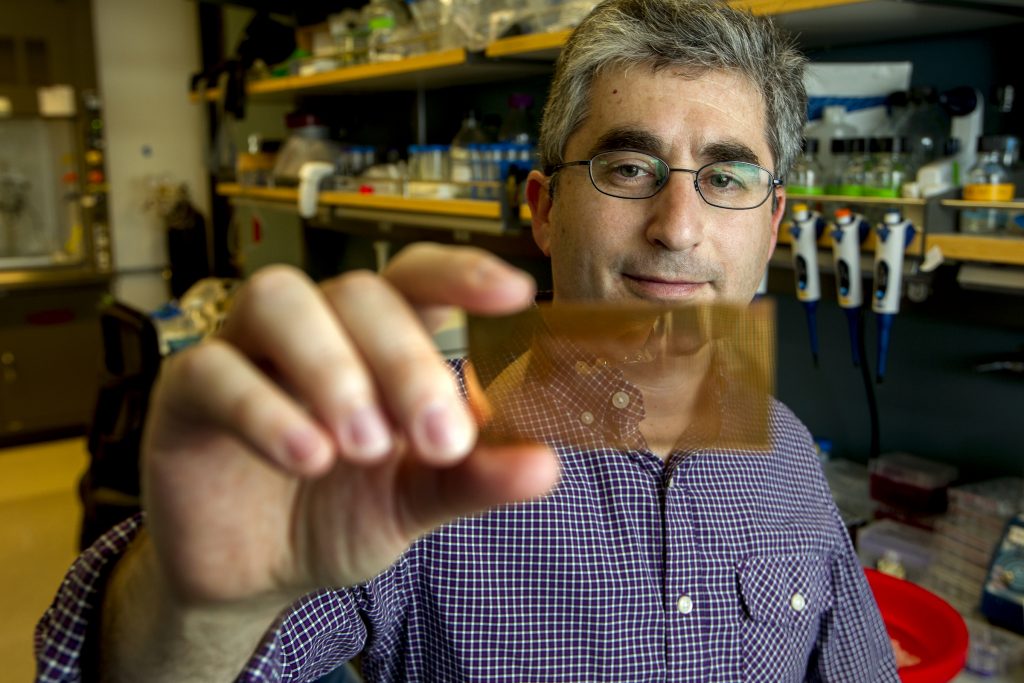
Microchip test to diagnose Type 1 diabetes

Researchers funded by JDRF have designed a cheap, microchip-based test that can diagnose Type 1 diabetes in the quickest time yet.
The test detects the presence of islet autoantibodies in a drop of blood. These proteins indicate that the immune system is primed to attack the insulin-producing cells of the pancreas – and are present in Type 1 but not Type 2.
Because of this, the test could be used after a diagnosis of diabetes, to distinguish whether a person has Type 1 or Type 2, potentially saving them from being misdiagnosed and receiving the wrong treatment.
The portability and low cost of the chip mean it could also be used more widely than current tests, so healthcare providers would no longer have to choose between a slower lab-based test and assuming which type of diabetes their patient has, based on their age and lifestyle.
Professor Brian Feldman, of Stanford University, who led the research, said: “With the new test, not only do we anticipate being able to diagnose diabetes more efficiently and more broadly, we will also understand diabetes better.”
Because the chip tests for autoantibodies, which are present even before a person develops the symptoms of Type 1, it could allow healthcare providers to monitor people at risk and give them treatment much sooner than is currently possible.
This could become even more important in future with the development of preventative treatments, as these would be most effective before a person loses their ability to produce insulin. Such treatments are a priority area of JDRF research as part of its strategy to cure, treat and prevent Type 1.
Feldman added: ‘The auto-antibodies truly are a crystal ball. Even if you don’t have diabetes yet, if you have one autoantibody linked to diabetes in your blood, you are at significant risk; with multiple autoantibodies, it’s more than 90 per cent risk.
“There is great potential to capture people before they develop the disease, and prevent diabetes or prevent its complications by starting therapy early.”
The research was published in the journal Nature Medicine.
Our T1 son was islet antibody negative upon diagnosis so theoretically if this test was used to determine the type of diabetes in the future people can still get misdiagnosed potentially.