
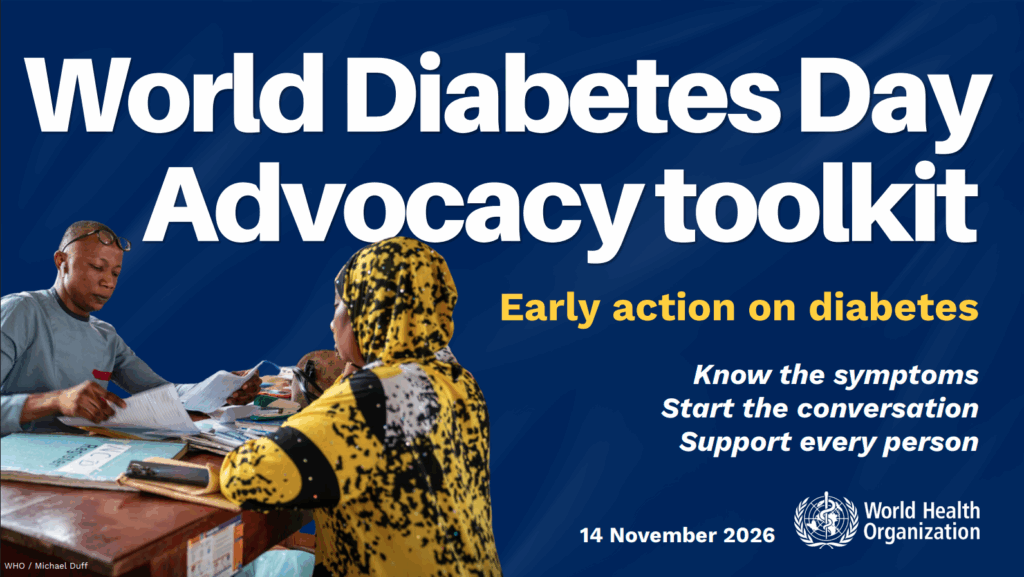
WHO urges healthcare professionals to prioritise early diagnosis and equitable care this World Diabetes Day

The World Health Organization (WHO) is calling on healthcare professionals to strengthen early diabetes detection, improve access to quality treatment and tackle stigma as part of its World Diabetes Day 2026 campaign.
Taking place on Saturday, 14 November, this year’s World Diabetes Day centres on the theme ‘Early action on diabetes’, highlighting the critical role healthcare professionals play in recognising symptoms, supporting timely diagnosis and ensuring people living with diabetes receive appropriate, ongoing care.
Through its Global Diabetes Compact, WHO is encouraging healthcare workers, policymakers and health organisations to take action under three key messages: Know the symptoms. Start the conversation. Support every person.
The campaign comes as the global burden of diabetes continues to rise. More than 800 million adults worldwide are living with the condition, a figure that has more than quadrupled since 1990.
According to WHO, more than 40% of people living with diabetes globally remain undiagnosed, reinforcing the importance of greater clinical awareness, earlier identification and improved access to diagnostic services.
Improving recognition and reducing diagnostic delays
A central priority of this year’s campaign is improving the recognition of diabetes symptoms among both healthcare professionals and the public.
WHO is urging healthcare workers to remain alert to common presentations, including increased thirst, frequent urination, unexplained weight loss, fatigue and blurred vision, to support timely testing, diagnosis and referral.
Particular attention is being drawn to type 1 diabetes, which can develop at any age and is frequently missed or misdiagnosed, especially in adults.
Delayed diagnosis can have life-threatening consequences, making prompt recognition and access to appropriate treatment essential.
WHO is also highlighting the challenges associated with identifying type 2 diabetes, where symptoms may be mild or absent, allowing the condition to remain undetected for years until complications emerge.
For healthcare professionals, the campaign reinforces the importance of recognising potential symptoms, acting promptly on clinical concerns and supporting patients through the diagnostic pathway.
Early diagnosis must be matched by access to quality care
While timely diagnosis is a key focus, WHO is emphasising that identifying diabetes is only the first step towards improving outcomes.
The organisation is calling for stronger health systems and sustained investment to ensure people living with diabetes can access affordable medicines, essential supplies and comprehensive, ongoing care.
Early diagnosis, followed by uninterrupted access to quality treatment and support, can help reduce the risk of long-term complications affecting the cardiovascular system, kidneys, eyes and nerves.
WHO is also encouraging governments and policymakers to integrate diabetes prevention and person-centred management into primary healthcare services, alongside strengthening supply chains for essential medicines and technologies.
These priorities form part of the WHO Global Diabetes Compact, established in 2021 to improve diabetes prevention and care worldwide.
The Compact supports countries in progressing towards global diabetes coverage targets endorsed by WHO Member States in 2022, including:
- Ensuring 80% of people living with diabetes are diagnosed.
- Achieving good glycaemic control in 80% of people with diagnosed diabetes.
- Achieving good blood pressure control in 80% of people with diagnosed diabetes.
- Ensuring 60% of people with diabetes aged 40 years or older receive statins.
- Ensuring 100% of people with type 1 diabetes have access to affordable insulin and blood glucose self-monitoring.
The targets underline the importance of moving beyond diagnosis to deliver effective, accessible and continuous diabetes management.
Tackling diabetes stigma in clinical practice
Alongside clinical priorities, WHO is placing significant emphasis on reducing the stigma experienced by people living with diabetes.
The organisation warns that diabetes-related stigma remains widespread and can contribute to unsupportive experiences for people managing the condition.
Healthcare professionals are being encouraged to communicate with empathy, avoid assumptions and involve people living with diabetes in decisions about their care.
WHO is also promoting the use of respectful, person-centred language and inclusive representations of diabetes, recognising the influence that communication can have on patient experiences.
The campaign highlights the importance of recognising the diverse needs of people living with diabetes across different stages of life, including childhood, pregnancy and older age.
It also draws attention to the role of emotional wellbeing, self-care and social support in effective diabetes management.
For healthcare teams, the message is to ensure that clinical care is accompanied by compassion, shared decision-making and an understanding of the individual challenges associated with living with diabetes.
WHO launches resources to support diabetes awareness
To mark World Diabetes Day, WHO has developed a range of advocacy and educational resources to help healthcare professionals, organisations and communities raise awareness and encourage earlier action.
These include downloadable symptom awareness posters in six languages, alongside social media materials addressing diabetes complications, stigma, self-care and the experiences of people living with diabetes.
Developed in collaboration with type 1 diabetes advocate and artist Janina Gaudin (@missdiabetes), the social media graphics explore the importance of supportive environments in healthcare, education, employment and everyday life.
WHO is also sharing a nine-image photographic exhibition, Beyond the numbers: Life with type 2 diabetes in Jordan, highlighting the lived experiences of people managing the condition.
In addition, the organisation is showcasing country-level initiatives aimed at strengthening diabetes prevention and care.
These include efforts to improve access to services for children with type 1 diabetes in the Philippines, strengthen primary healthcare in Belize and Ghana, and advance comprehensive diabetes care through innovative approaches in Thailand.
The examples aim to demonstrate how different healthcare systems are addressing challenges in diabetes prevention, diagnosis and management.
A call to action for healthcare professionals
As World Diabetes Day approaches, WHO is encouraging healthcare professionals to translate awareness into meaningful clinical action.
Its recommendations include recognising potential symptoms to facilitate timely testing and referral, supporting appropriate prevention and management across all types of diabetes, and adopting empathetic, non-stigmatising communication.
The organisation is also calling on healthcare workers to actively involve people living with diabetes in treatment decisions and support access to ongoing, person-centred care.
Beyond individual consultations, WHO is urging health organisations and policymakers to strengthen diabetes services, address inequalities in access to treatment and accelerate progress towards the Global Diabetes Compact targets.
With diabetes prevalence continuing to rise globally, this year’s campaign reinforces the importance of early intervention, effective clinical management and equitable healthcare provision.
WHO is encouraging healthcare professionals and organisations to share its campaign resources and join the global conversation using #WorldDiabetesDay.
Further information and campaign resources are available through the WHO Global Diabetes Compact’s World Diabetes Day 2026 advocacy toolkit.